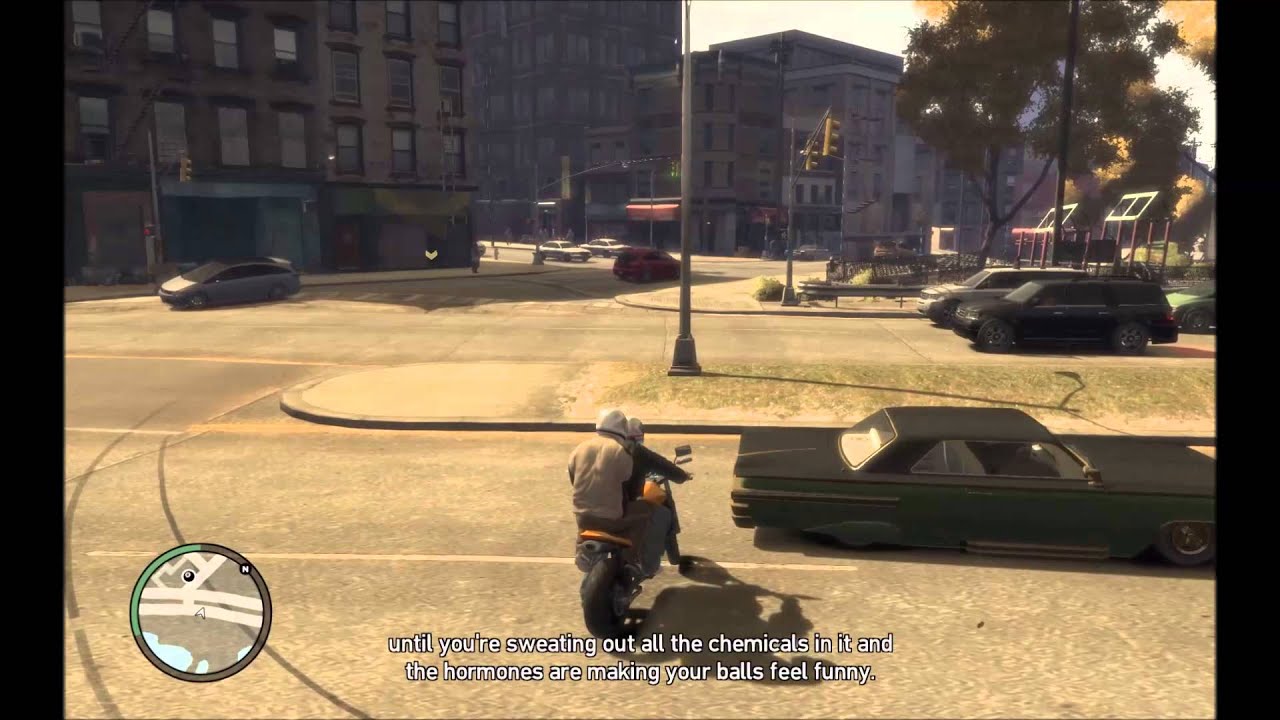
Niko Bellic Describes America in Grand Theft Auto IV

""Everything is just advertising with nothing to back it up" 2008 rockstar describes 2021 rockstar"

@MayYTlive• 4y ago
25.7k

Niko Bellic Describes America in Grand Theft Auto IV

There’s a particular irony sitting at the heart of Grand Theft Auto IV. A game fundamentally built around theft, high-speed chases, and chaos ended up delivering one of the most quietly thoughtful pieces of writing the medium has ever seen.

You feel it most through Niko Bellic — an immigrant who arrives in Liberty City chasing a cousin’s exaggerated promises of easy money, only to find a world that runs on exactly the kind of hustling, lying, and disappointment he thought he had left behind. He isn't a blank cipher designed just to shoot things; he is tired, sardonic, and painfully self-aware.

What keeps resurfacing in fan discussions years later is Niko’s blunt dismantling of the "land of opportunity" myth. He delivers his critiques not as a preachy rant, but almost as an aside. He isn’t lecturing the player about capitalism; he’s simply a guy who came looking for a promise and found a hollow sales pitch instead. The game’s satire cuts in every direction—fake self-help gurus, empty reality-TV culture, and real estate scams—yet it’s all delivered with a wink, ensuring the cynicism never curdles into total bleakness.

How Players Remember Liberty City

Looking at how the community reacts to this dialogue today, it is clear that Niko's observations have taken on a prophetic quality. Fans consistently point out how the game's writing predicted not just society, but the trajectory of the gaming industry itself:

  • Predicting the Future of the Franchise: Top hero commenter @MayYTlive highlights the sheer meta-irony of Niko's line, "Everything is just advertising with nothing to back it up," adding the sharp observation that "2008 rockstar describes 2021 rockstar".

  • A Self-Fulfilling Satire: Echoing this exact sentiment, fellow hero commenter @rupel190 points out the stark contrast with the franchise's modern identity, noting, "It's beautiful how they made a parody of themselves looking at what GTA V has become." This is further backed by @vuvietanh7472, who observes, "It's ironic that everything Niko said is basically true in GTA V."

  • A Masterclass in Character Depth: Beyond the social commentary, user @michaellecis7849 praises the grounded portrayal of Niko himself, calling him "hands down the smartest character ever seen as a protagonist" and commending the developers for making him "a real human being with a lot of different shades in his personality".

  • The Franchise Peak: Summarizing the overarching sentiment of the fanbase, @undead9999 simply states, "GTA IV has probably the best writing in the series."

Ultimately, that underlying tension is exactly why comparisons to later entries keep surfacing. Where sequels leaned much harder into blockbuster spectacle and over-the-top action, GTA IV's story stayed rooted in something deeply uncomfortable and human. It remains a rare achievement for an open-world crime simulator to function as a genuine character study, proving that Liberty City's greatest asset wasn't its size, but its soul.

Do you find this post helpful?
Comments:
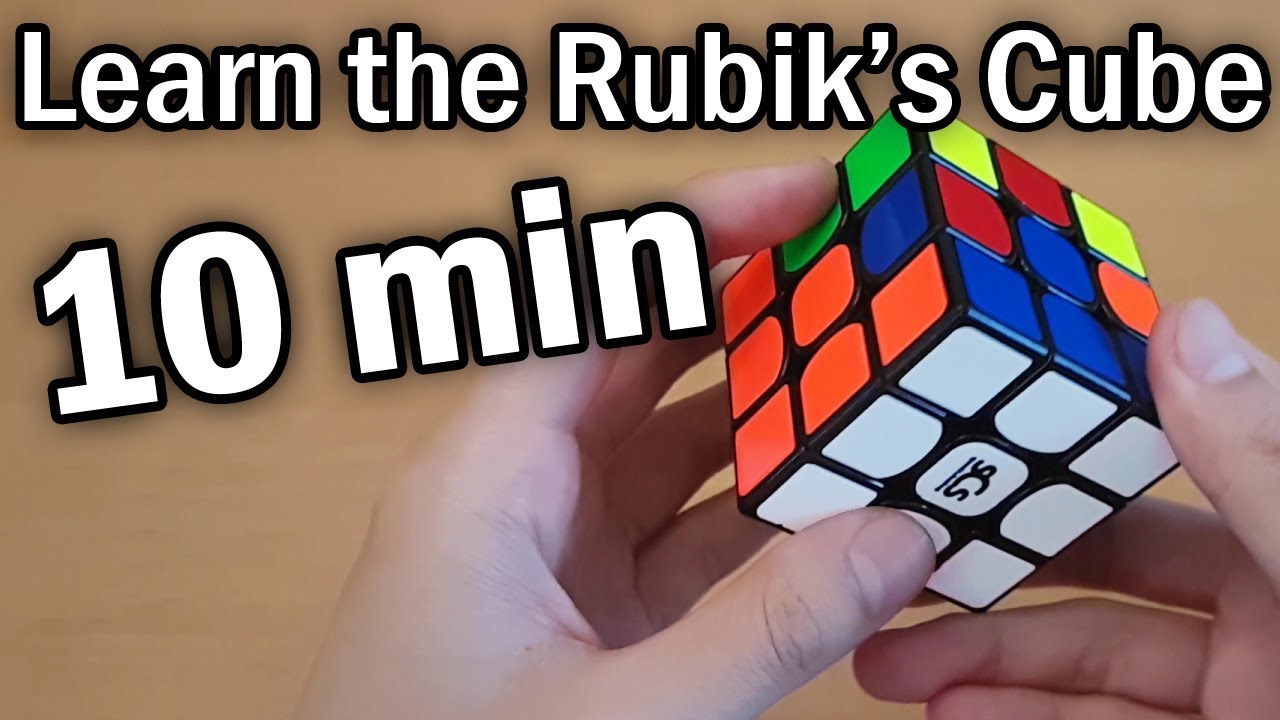
Decoding the Rubik's Cube: From Frustration to Mastery

"Oh, so this is how parents feel when you try to explain new technology to them."

@boalollal242• 6y ago
21.7k

Decoding the Rubik's Cube: From Frustration to Mastery

Invented in 1974 by Hungarian architecture professor Ernő Rubik, the Rubik's Cube began as a humble teaching tool designed to help students grasp three-dimensional geometry. Rubik never anticipated his creation would become the most popular puzzle toy in history. The extraordinary difficulty of the cube stems from its massive scale: a standard puzzle boasts over 43 quintillion possible configurations with only a single solved state.

Randomly twisting the blocks rarely leads to success. Mastery instead requires structured algorithms. While beginners often mistake solving the puzzle for pure intuition, it actually relies heavily on pattern recognition and practiced execution.

The Beginner Method: A Five-Step System

This tutorial bridges that gap by teaching a highly predictable, step-by-step beginner system:

  • Step 1 — The White Cross: Build a cross around the white center piece, ensuring the side colors of those edge pieces perfectly align with the adjacent side centers.

  • Step 2 — The First Layer: Turn the cube upside down and use a foundational four-move sequence (Right Up, Top Left, Right Down, Top Right) to properly drop the white corners into place.

  • Step 3 — The Second Layer: Match non-yellow edges on the top layer to their center color, push them away from their target slot, and use the four-move sequence to slot them into the middle layer.

  • Step 4 — The Yellow Cross: Use a short algorithm to manipulate the top yellow edges from a dot, to an L-shape, to a horizontal line, and finally into a complete cross, adjusting them to match the side centers.

  • Step 5 — Positioning and Orienting Final Corners: Cycle the remaining top corners into their correct locations (even if flipped incorrectly). Finally, turn the cube upside down and repeatedly use the four-move sequence to rotate each corner until the puzzle is solved.

The Community Reacts: Frustration and Triumph

Learning these algorithms is a universal test of patience. Filtering through the community response, these five hand-picked comments perfectly capture the grueling but rewarding process of learning to solve the cube:

  • The Learning Curve: Hero commenter @boalollal242 humorously noted the steep mental hurdle: "Oh, so this is how parents feel when you try to explain new technology to them."

  • The Time Dilation: Hero commenter @jordanwilliams1514 pointed out the brutal reality of the tutorial's title: "10 minute video turned into a couple hours."

  • The Panic: Selected commenter @JenniizCookiez highlighted the anxiety of trying to keep up with the instructor: '"Now pay attention because if you get this wrong you'll mess up the whole cube" goes at the speed of light'.

  • The Ultimate Heartbreak: Selected commenter @miecaf captured the most devastating feeling in cubing: "Nothing hurts more than being on the last step and then messing up the algorithm".

  • The Final Payoff: Despite the intense frustration, Selected commenter @mattnnat1 perfectly summarized the euphoric end result: "This probably doesn't mean anything to anyone but this took me forever but I finally did it and I've never been more happy and proud".

More Than Just a Toy

Ultimately, conquering the Rubik's Cube is a masterclass in patience and algorithmic execution. By breaking down those 43 quintillion possibilities into a predictable five-step system, anyone can transform this notoriously difficult 1974 teaching tool into a deeply rewarding personal achievement.

Do you find this post helpful?

Comments: