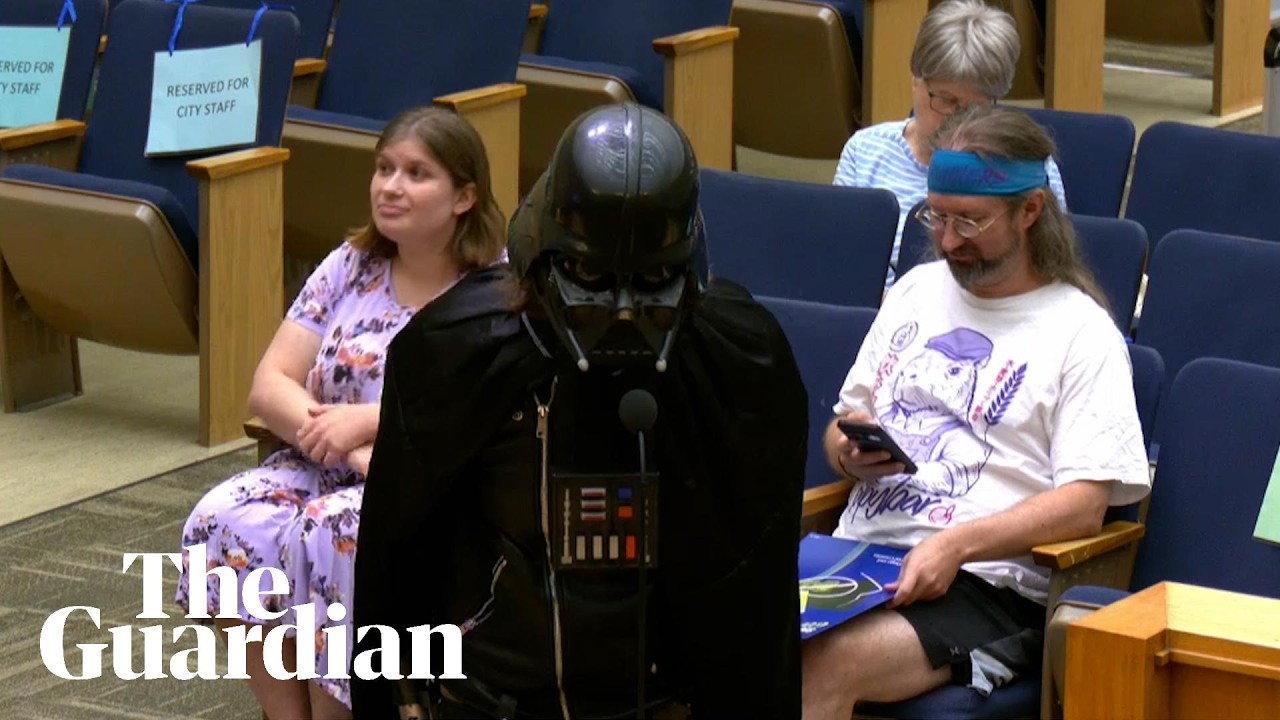
Space Satire: Darth Vader vs. The Surveillance State

""I find this council's lack of faith disturbing.""

@ManChan-w5p• 1mo ago
19.8k

Space Satire: Darth Vader vs. The Surveillance State

This deeply surreal clip captures a citizen addressing a city council meeting while fully cosplaying as Darth Vader, the iconic antagonist of the Star Wars franchise. The subject of the meeting is the implementation of Flock Safety cameras—a highly controversial mass surveillance technology. Rather than delivering a standard, impassioned plea for civil liberties, the speaker employs a brilliant, high-effort routine of reverse psychology. Speaking entirely in character, he aggressively advocates for the cameras, arguing that the "Emperor" needs this technology to track "rebel scum," stalk former partners, and fill detention centers with free prison labor. The absolute deadpan commitment to the bit perfectly highlights the dystopian reality of constant civic surveillance, making the council's actual political double-speak sound utterly absurd by comparison.

The Community Reacts: The Dark Side of Local Politics

The internet immediately recognized the brilliance of using extreme theatrical villainy to expose actual government overreach. Filtering through the political commentary, these curated comments perfectly deconstruct why the satirical performance was so highly effective:

  • The Honest Sith: Hero commenter @Nafebutuoy39 pointed out the tragic irony of the performance: "The worst part is he's being more genuine than the politicians". By openly embracing the villainous potential of the technology, the cosplayer strips away the polished, bureaucratic PR language usually used to sell mass surveillance to the public.

  • The Cinematic Callback: Hero commenter @ManChan-w5p perfectly adapted the Sith Lord's one of the most famous movie quote to fit the municipal setting: "I find this council's lack of faith disturbing.". It masterfully bridges the gap between a high-stakes space opera and the incredibly dry reality of local government proceedings.

  • The Tactical Approach: Selected commenter @kingbenjithegreat6195 appreciated the underlying rhetorical strategy: "The reverse psychology is genuinely genius". Instead of getting angry and being dismissed as a crank, the speaker forces the council to listen to a mirror reflection of their own policies taken to their logical, terrifying extreme.

  • The Wardrobe Technicality: Selected commenter @Steve-id5qx delivered a classic internet compliment with a twist: "Not all heroes wear capes, but this one does.". It playfully acknowledges that while Vader is universally recognized as a symbol of evil, the citizen beneath the helmet is performing a vital civic duty.

  • The Ultimate Medium: Selected commenter @AlexanderMastrian summarized the power of the performance: "Sometimes satire is the best critique.". It proves that political theater, when executed with enough commitment and absurdity, can cut through bureaucratic noise far more effectively than traditional debate.

The Technology of the Empire: How ALPR Networks Operate

To fully understand why this satirical performance resonated so deeply online, one must look at the actual mechanics of the technology being debated. Flock Safety cameras are a modern iteration of Automated License Plate Readers (ALPR). Unlike traditional traffic cameras that only trigger during a speeding violation, ALPR systems act as an always-on dragnet. They utilize advanced optical character recognition (OCR) and machine learning algorithms to capture and catalog every single passing vehicle, recording the license plate, vehicle make, model, color, and precise timestamp.

The speaker's hyperbolic joke about tracking "rebel scum from playground to playground" touches on a very real, documented privacy concern. Because these camera networks are often interconnected across multiple municipalities and states, they create a centralized, searchable database of civilian movement. When deployed in high densities, these systems allow operators to retroactively map a citizen's daily routine—from their workplace to their doctor's office, to their place of worship—without requiring a traditional judicial warrant.

Furthermore, the cosplayer's specific, unsettling joke about needing the cameras to "stalk my ex-girlfriend" highlights the most critical flaw in mass surveillance architecture: the human element. The centralized databases that house ALPR data have historically been vulnerable to abuse, where individuals with administrative access have utilized municipal technology for personal vendettas or unauthorized tracking. By dressing as a literal space fascist to demand more cameras, the speaker masterfully exposes the inherent dangers of building a turnkey surveillance apparatus. He essentially forces the local government to reckon with the fact that once the infrastructure for absolute control is installed, it is only one bad administration away from becoming an actual empire.

Do you find this post helpful?
Comments:
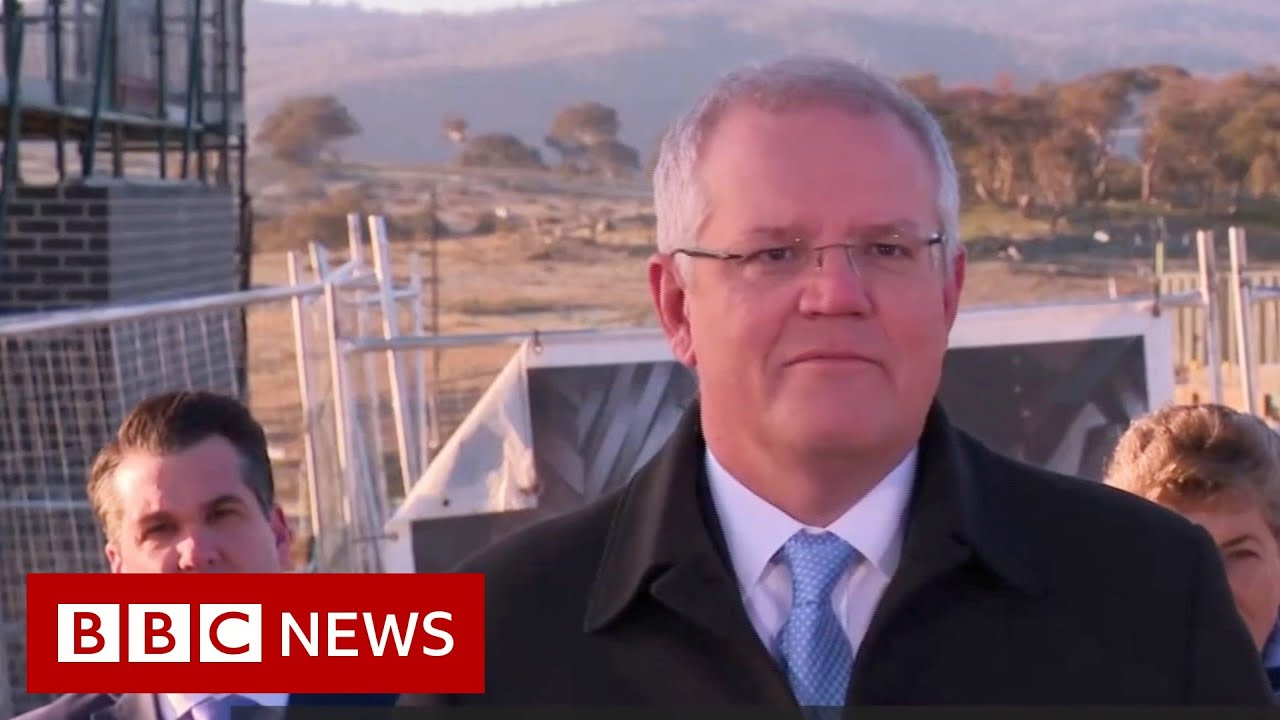
Get Off My Lawn: Australian Man Interrupts An Interview Of PM Morrison

"Nobody is above the lawn."

@mubanga-f7o• 6y ago
190.6k

Get Off My Lawn: Australian Man Interrupts An Interview Of PM Morrison

In the middle of a serious, live television broadcast, a homeowner in Australia politely but firmly interrupted then-Prime Minister Scott Morrison with a universally understood suburban decree: asking the massive news crew to step off his freshly seeded grass.

Morrison, flanked by BBC cameras, reporters, and security, complied instantly—without irritation, hesitation, or pulling rank. He treated the request as entirely ordinary despite being interrupted mid-press conference. He immediately directed his team to shuffle forward onto the pavement, offering a casual "Sorry, mate" to the homeowner, who simply nodded and went about his day.

The Community Reacts: Civility and Grass

The exchange's understated tone is precisely what resonated with viewers worldwide. Filtering through the community response, these five hand-picked comments perfectly capture the humor, the cultural significance, and the unapologetic boldness of the homeowner:

  • The Supreme Law: Hero commenter @mubanga-f7o highlighted the ultimate, unbreakable rule of suburban life: "Nobody is above the lawn."

  • The Realization: Hero commenter @ks33-1 painted a hilarious picture of how the confrontation likely began: "He was probably watching them on TV when he realized they're on his grass."

  • The Casual Aussie: Selected commenter @starwarsrebel2006 appreciated the remarkably laid-back demeanor of the exchange: "I love how he said, 'Sorry mate,' to the Prime Minister of Australia, like he was just some random guy, lol."

  • The Familiarity: Echoing that sentiment, Selected commenter @_sno_3820 added: "I like how he just talks to his prime minister like he knows him"

  • The Democratic Ideal: Finally, Selected commenter @user-gv1fe5sz2p summarized the deeper, underlying political reality of the interaction: "You can tell you're living in a healthy democracy when this happens lol"

A Subtle Marker of Democracy

Ultimately, this brief television blooper evolved into a global viral sensation because it represents a head of government yielding immediately to an everyday citizen's small, reasonable boundary. It is a wonderfully mundane interaction entirely free of confrontation, ego, or political theater. Commentators continually point to the moment as a refreshing example of a functioning democracy—one where authority does not override basic civility, and where ordinary social rules apply just as much to a prime minister as to anyone else.

Do you find this post helpful?

Comments:
The Ultimate Broadcast Absurdity Meme: "Why Are You Gae?"

"He went *STRAIGHT* to the point"

@Alienboi2005vidsandstuff• 3y ago
53.9k

The Ultimate Broadcast Absurdity Meme: "Why Are You Gae?"

If there was a Mount Rushmore of internet memes, this 2012 clip from the Ugandan TV show Morning Breeze by NBS Television would be carved in stone. The interview features presenter Simon Kaggwa Njala staring at human rights activist Pepe Julian Onziema before dropping the most hilariously blunt, deadpan icebreaker in broadcast history: "Why are you gay?" The sheer absurdity of the delivery turned a serious political broadcast into absolute comedy gold. By abandoning all standard journalistic etiquette for a jarringly abrupt confrontation, the moment instantly transcended its original context, cementing its legendary status as one of the most recognizable and endlessly remixed reaction videos of all time.

The Community Reacts: Deadpan Comedy

The internet immediately seized on the surreal pacing of the exchange. Filtering through the millions of laughs, these curated comments perfectly deconstruct why this specific interview feels like a masterful comedy sketch:

  • The Double Entendre: Hero commenter @Alienboi2005vidsandstuff nailed the interviewer's complete lack of tact with a brilliant piece of wordplay: "He went STRAIGHT to the point". The pun playfully contrasts the specific subject matter with Njala's aggressive, zero-buildup interviewing style, highlighting how he entirely abandoned standard journalistic etiquette to drop a massive conversational bombshell without any warning.

  • The Awkward Preamble: Hero commenter @smartmart3095 highlighted the fumbling introduction that set the stage: “Mister..should I call you mister”. This focuses on the profound hesitation immediately preceding the questioning. The joke thrives on the hilarious contrast between Njala's visible, awkward struggle to figure out basic polite address, followed seconds later by him delivering the most blunt, unpolished personal question imaginable.

  • The Absurdist Script: Selected commenter @kishanbhatt1206 simply transcribed the rapid-fire flow: ""Should I call you Mista?" "Why are you gay?" "Who says I'm gay?" "YOU ARE GAY." The most brilliant conversation in human history". By stripping away the visuals and writing it out as pure dialogue, the comment proves that the actual exchange reads exactly like a highly scripted, absurdist Monty Python sketch. The sheer speed at which Njala confidently dictates his guest's identity back to him is completely detached from reality.

  • The Iconic Phonetics: Selected commenter @tonystar8224 noted the cultural delivery of the line: "The African accent just made it.10× more funnier 😂😂". The specific cadence and serious, heavily rhythmic pronunciation of "gae" completely alters the weight of the question. It is this exact, deadpan vocal delivery that transformed a brief television clip into a universally recognizable, endlessly loopable soundbite used by thousands of content creators.

  • The Cinematic Universe: Selected commenter @VirtuallyVain seamlessly crossed the streams of internet history: "Why... are you running ?!". By dropping a famous quote from an entirely different, equally legendary Nollywood film meme from the movie Pretty Liars 1 into this thread, the comment creates a hilarious fictional universe. It playfully connects the web's greatest cultural exports, treating these viral African broadcasts and movies as if they all exist within the same interconnected comedic timeline.

The Reality Behind the Reaction

While the viral clip provides endless entertainment, it masks a highly complex social climate. In recent years, Uganda has passed some of the strictest legislative measures globally regarding sexual orientation, establishing severe legal penalties and extended judicial sentences for related activities. This stark contrast between the internet's favorite lighthearted reaction meme and the serious legislative reality creates a fascinating duality, perfectly illustrating how global web culture often completely detaches digital media from its original, real-world context.

Do you find this post helpful?

Comments: